Thailand’s Flag in Space! Thai-Developed TLC Payload Installed on the ISS
12/19/20254 min read
Thailand’s Flag in Space! Thai Researchers’ TLC Payload Installed on the ISS
A landmark moment for Thailand’s space community was recorded at 05:11 a.m. on September 15, 2025, when the TLC payload (Thailand Liquid Crystals in Space)—a liquid crystal experiment developed by Thai researchers—launched smoothly into space from Cape Canaveral, Florida, USA.
The mission was part of NASA’s Commercial Resupply Services (CRS) program. The TLC payload was carried aboard Northrop Grumman’s Cygnus spacecraft (flight NG-23) and launched on a SpaceX Falcon 9 rocket bound for the International Space Station (ISS), with a Thai delegation present to witness and celebrate the achievement.
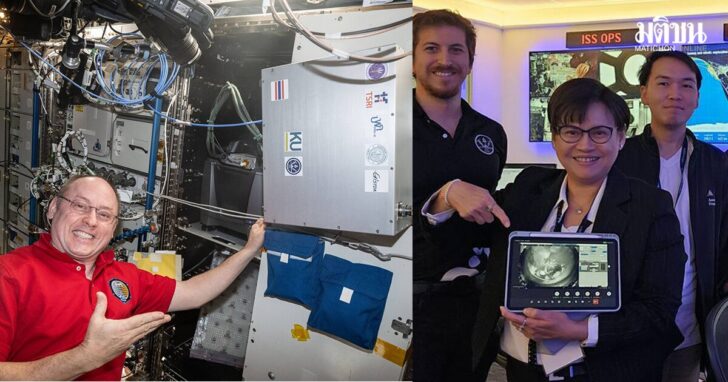
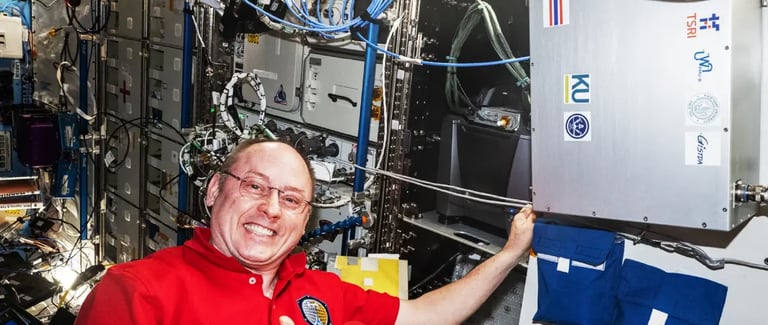
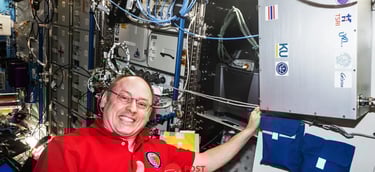
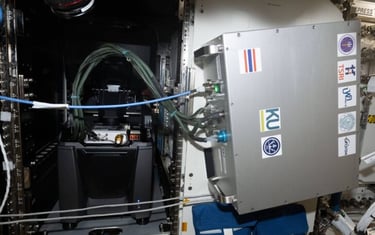
Most recently, on December 18, the project’s Facebook page (Thailand Liquid Crystals in Space – TLC) shared an update and photos showing NASA astronaut Mike Fincke installing the TLC payload into the KERMIT microscope (KEyence Research Microscope Testbed) on the ISS, and replacing the microscope filter with the dedicated TLC project filter delivered with the payload.
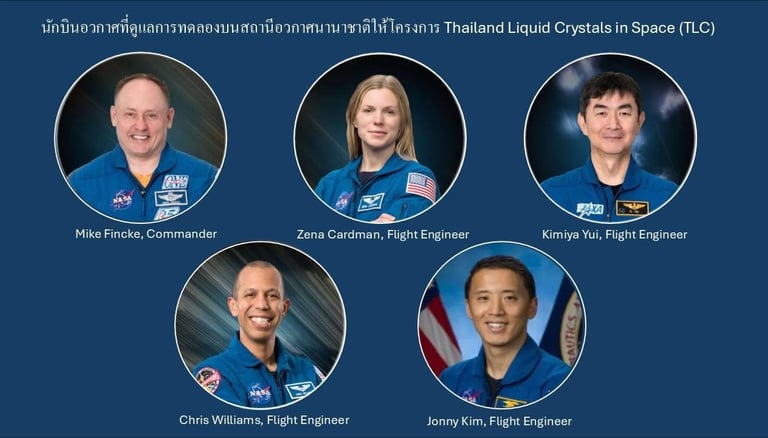
A total of five astronauts are supporting TLC experiment operations: Commander Mike Fincke (NASA), Zena Cardman (NASA), Kimiya Yui (JAXA), Chris Williams (NASA), and Jonny Kim (NASA). The TLC space experiments are being conducted from December 1 to December 22, 2025, for a total of 120 hours of experimentation aboard the International Space Station (ISS).
The TLC payload is scheduled to be returned to Earth on SpaceX-33 in January 2026, together with the experiment data stored on a 6 TB SSD hard drive. The data will then be delivered to Thailand for further analysis by the research team and students.
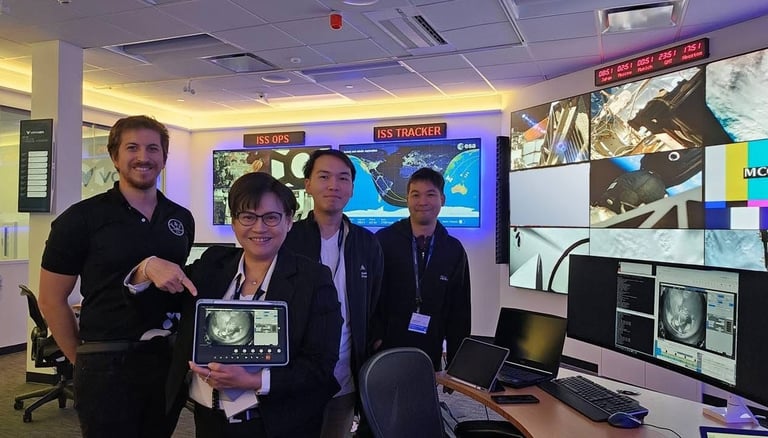
TLC operations are carried out by NASA astronauts in coordination with the Thai research team and Kasetsart University students on the ground, stationed at the Payload Operation Control Center at Voyager Technologies in Houston, Texas, and the ISS Microscope Control Center at BioServe Space Technologies in Boulder, Colorado—both companies operating under NASA oversight.
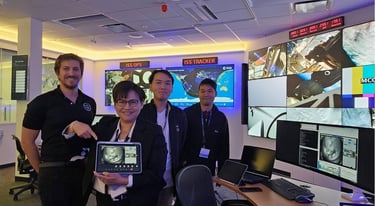
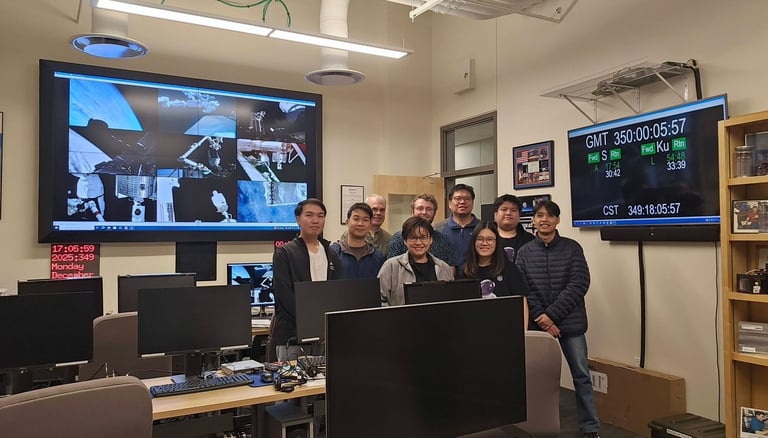
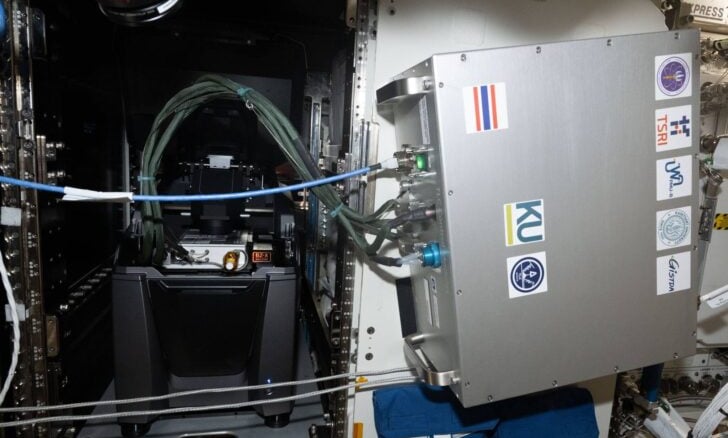
The payload for the Thailand Liquid Crystals in Space (TLC) project—designed for microgravity liquid-crystal experiments aboard the International Space Station (ISS)—consists of two main components: the Control Module and the Image Module.
Control Module
The Control Module manages system control, supplying electrical power, water, and air to the Image Module. It weighs approximately 15.7 kg and has a rectangular box shape measuring 330 mm (W) × 417 mm (L) × 190 mm (H). During experiments, it is mounted on the door wall of the KERMIT (Keyence Research Microscope Testbed) rack.
Image Module
The Image Module is responsible for delivering the liquid crystal material to a perforated plate used to form the liquid-crystal film. It creates the film and transports water vapor and air required for the experiments. The base plate of the Image Module is designed to attach to the base inside the KERMIT microscope using a metal fixture. In addition, a transparent polycarbonate cover is installed over the base plate during transport to protect it from damage. The Image Module weighs approximately 4.0 kg and measures 165 mm (W) × 182.5 mm (L) × 48 mm (H).
Power, Sessions, and Data Link
Both payload components are designed to operate using the ISS 28-volt DC power system. NASA has authorized a maximum power draw of up to 120 watts from the ISS for the combined system.
The experiment plan includes at least 48 sessions, with each session lasting 3 hours, for a total of 144 hours of planned experimentation. During each session, the team can record results and send operational commands from ground control to the ISS via an uplink network, while monitoring the experiment via downlink throughout the session. Experimental data, including high-resolution video, will be returned on a 6 TB SSD hard drive.
The TLC project studies liquid crystals under microgravity aboard the International Space Station (ISS). The project received its primary funding for building the payload to be flown and tested in space from PMU-B (the Program Management Unit for Human Resources & Institutional Development, Research and Innovation) during 2023–2025. The research is being carried out through collaboration among specialists from the Faculty of Science, Kasetsart University, the Geo-Informatics and Space Technology Development Agency (GISTDA), experts from NASA (USA), and the ISS U.S. National Laboratory.
The Thailand Liquid Crystals in Space (TLC) project originated from a Memorandum of Understanding (MOU) signed between NASA—represented by Dr. Meredith M. McKay, Director of the Human Exploration and Operations Division—and Kasetsart University President Dr. Jongrak Wachirinrat. The MOU was officially signed on June 24, 2021, enabling the research team from Kasetsart University and GISTDA—led by Assoc. Prof. Dr. Nattaporn Chattam (Department of Physics, Faculty of Science, Kasetsart University)—to participate in liquid crystal research on the ISS. The MOU was described as the first space-experiment MOU between NASA and a country in Southeast Asia.