Kasetsart University Announces Successful Installation of Thai-Built “TLC” Payload on the ISS
12/19/20252 min read
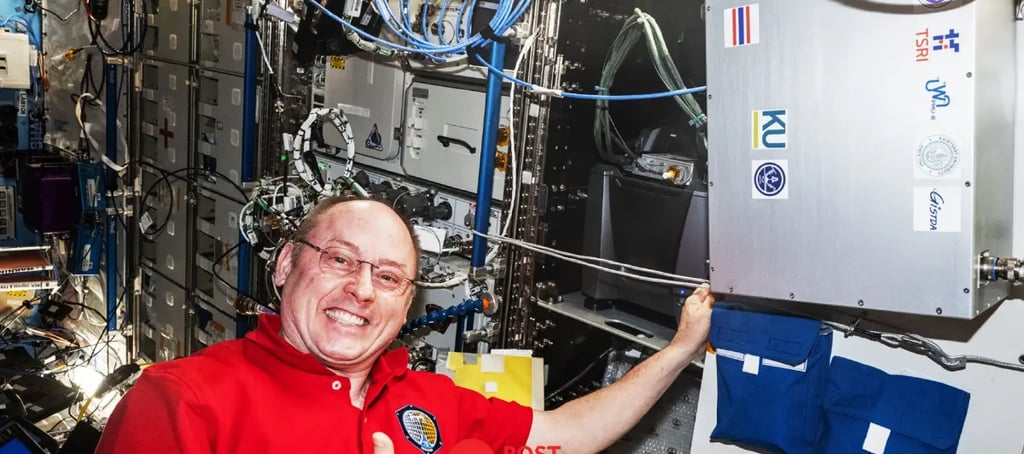
On December 18, Kasetsart University reported an update on the successful installation of the Thai payload “TLC” (Thailand Liquid Crystals in Space)—developed by Thai researchers for liquid crystal experiments in space—aboard the International Space Station (ISS). The university stated that the payload has been operating as designed.
Assoc. Prof. Dr. Nattaporn Chattam (Department of Physics, Faculty of Science, Kasetsart University) said that the Thai TLC payload was installed on the ISS for experimentation by NASA astronaut Mike Fincke, in collaboration with the Thai research team. The project is studying thin liquid-crystal films under microgravity for a total of 120 hours, conducted from December 1–22, 2025.
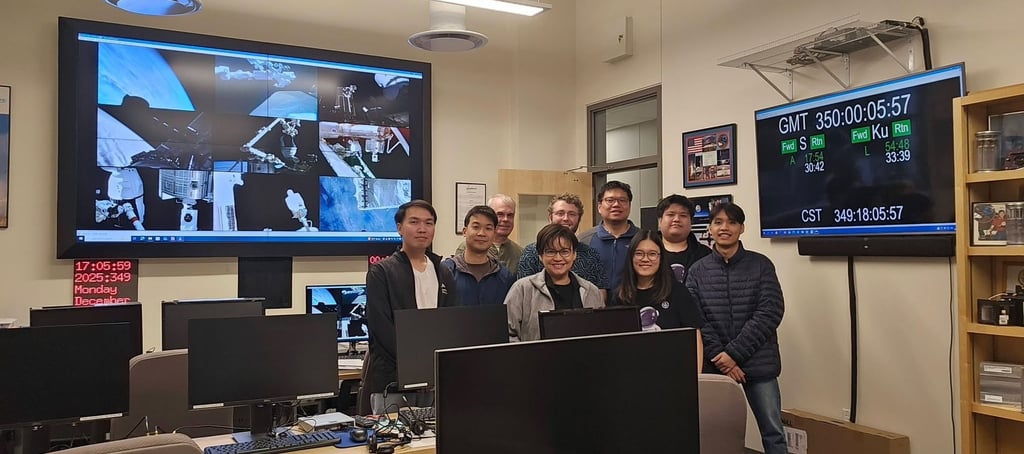
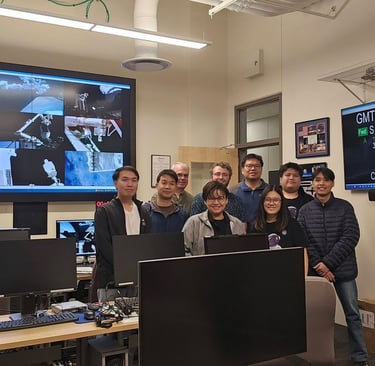
Each morning, astronauts must install the payload and initiate the experiment for the research team. Experiment operations are controlled by the Thai researchers from the payload control room at Voyager Technologies in Houston, Texas, while the KERMIT microscope is operated by the control team at BioServe Space Technologies in Boulder, Colorado.
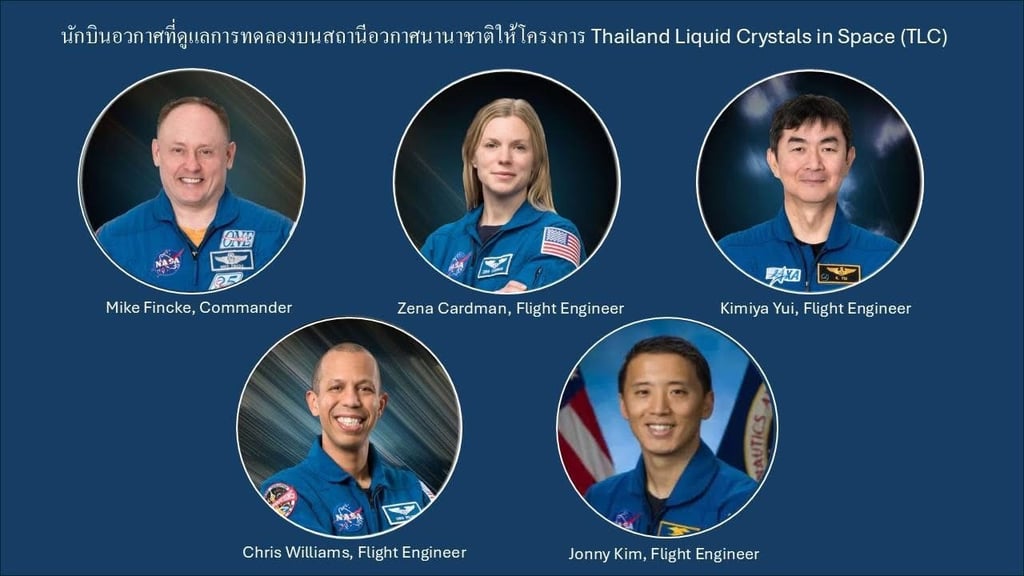
A total of five astronauts are supporting the TLC experiment:
Commander Mike Fincke (NASA)
Zena Cardman (NASA)
Kimiya Yui (JAXA)
Chris Williams (NASA)
Jonny Kim (NASA)
The experiment team consists of:
Assoc. Prof. Dr. Nattaporn Chattam (Principal Investigator)
Asst. Prof. Dr. Apichat Phatthanaphokhrattana (Deputy Principal Investigator)
Wutthiphon Sathianphaisan (software engineer and master’s student)
Chaturong Chanria (electrical engineer)
Theerathat Chomchok (PhD student overseeing Experiment 1)
Jutharat Kaewthong (researcher overseeing Experiment 2)
Noppadon Saniwong na Ayutthaya (master’s student overseeing Experiment 3)
NASA Astronaut Mike Fincke Installs TLC into the KERMIT Microscope on the ISS
Assoc. Prof. Dr. Nattaporn Chattam (Department of Physics, Faculty of Science, Kasetsart University) stated that the TLC payload was installed on the ISS for experimentation by NASA astronaut Mike Fincke. Working together with the Thai research team, the mission is studying thin liquid-crystal films under microgravity for a total of 120 hours, running from December 1–22, 2025.
Each morning, astronauts must install the payload and initiate the experiment for the research team. The experiments are controlled remotely by Thai researchers from Voyager Technologies’ payload control room in Houston, Texas, while the KERMIT microscope is operated by the control team at BioServe Space Technologies in Boulder, Colorado.
A total of five astronauts are supporting the TLC experiment operations:
Commander Mike Fincke (NASA)
Zena Cardman (NASA)
Kimiya Yui (JAXA)
Chris Williams (NASA)
Jonny Kim (NASA)
The experiment team includes:
Assoc. Prof. Dr. Nattaporn Chattam (Principal Investigator)
Asst. Prof. Dr. Apichat Phatthanaphokhrattana (Deputy Principal Investigator)
Wutthiphon Sathianphaisan (software engineer and master’s student)
Chaturong Chanria (electrical engineer)
Theerathat Chomchok (PhD student overseeing Experiment 1)
Jutharat Kaewthong (researcher overseeing Experiment 2)
Noppadon Saniwong na Ayutthaya (master’s student overseeing Experiment 3)
“Having the payload in space and being able to conduct different experiments makes us, as researchers and as a team, extremely proud that it is functioning exactly as designed. We’re happy the payload withstood the intense vibrations of launch to the space station and is still operating as planned. This shows that Thai researchers’ work meets international space standards. What I want to tell Thai people is that Thai capability can compete on the global stage without fear. With full effort and determination, we can reach our goals—we can definitely reach space,” said Assoc. Prof. Dr. Nattaporn Chattam.